
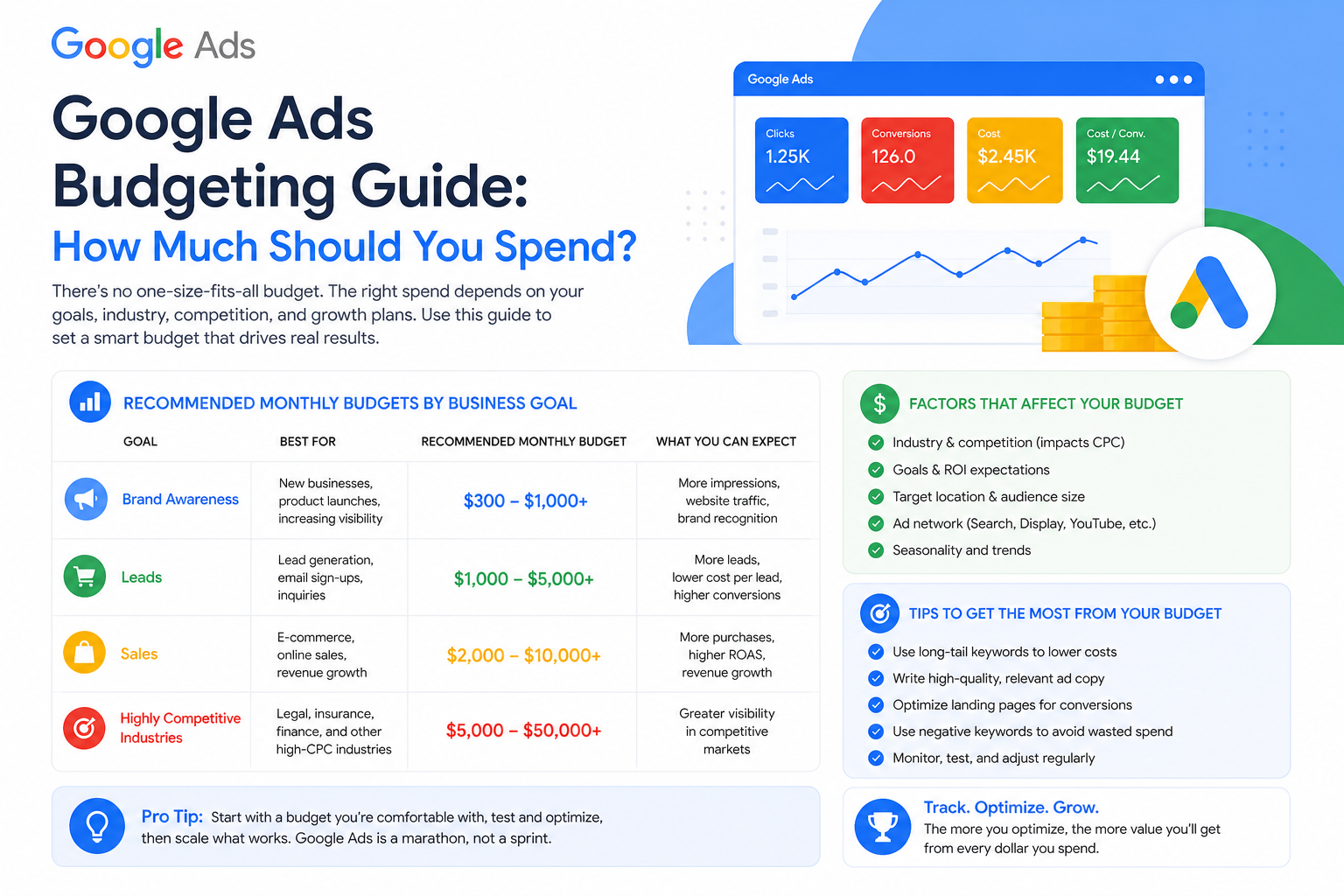
For small and medium-sized enterprises (SMEs), navigating the digital advertising landscape can be daunting, especially when it comes to setting a Google Ads budget. Understanding how much to spend on pay-per-click (PPC) advertising is crucial for maximizing return on investment (ROI) and ensuring that your marketing efforts yield tangible results. This guide aims to demystify the process of budgeting for Google Ads, providing strategic insights to help you optimize your ad spend effectively.
Assessing Your Advertising Goals
Before determining your Google Ads budget, it’s essential to clearly define your advertising goals. Are you aiming to increase website traffic, generate leads, boost sales, or enhance brand awareness? Each goal may require a different budget approach. Generally, aligning your budget with specific, measurable objectives allows you to track progress more accurately.
For example:
- Brand Awareness: Higher investment in display ads to reach a broader audience.
- Lead Generation: Allocating funds to search ads with targeted keywords.
- Sales Conversions: Budgeting for remarketing campaigns to re-engage past visitors.
Understanding PPC Cost Factors
The cost of PPC advertising can vary significantly based on several factors, which need careful consideration when planning your budget:
Competition and Industry
The level of competition within your industry profoundly impacts ad costs. High-demand industries often see higher cost-per-click (CPC) rates, making it crucial to conduct competitive analysis. Consider using tools like Google Keyword Planner to gauge competition levels and estimate CPC costs for your chosen keywords.
Quality Score
Google Ads operates on a quality score system that affects ad pricing. Ads with higher relevance, better click-through rates (CTR), and optimized landing pages enjoy lower costs and better placement. Focusing on improving your quality score can significantly reduce your overall ad spending.
Keyword Selection
Broad and more general keywords often require a larger budget due to high competition, while long-tail keywords may cost less and deliver more targeted results. Balancing between these types of keywords can optimize your budget and ensure you attract the right audience.
Creating an Effective Ad Spend Strategy
An effective ad spend strategy is vital for making the most of your Google Ads budget. Here’s how you can develop a strategic approach:
Start Small
If you’re new to Google Ads, it’s wise to start with a smaller budget. This approach allows you to test the waters, analyze performance data, and adjust your strategy without risking a large portion of your funds. Gradually scale up as you gather insights into what works best for your business.
Leverage A/B Testing
Experiment with different ad creatives, formats, and keywords through A/B testing to optimize your campaigns. This method helps determine which combinations yield the highest ROI, enabling you to allocate your budget to more successful elements.
Monthly Budgeting
Allocate your budget on a monthly basis to maintain control over your spending. A clear monthly budget allows for better tracking and adjustments, ensuring you don’t overspend in any particular period. Monitor your campaign performance closely and adapt your strategy as needed.
For more detailed assistance in optimizing your ad strategy, check out our Google Ads services in Madurai.
Setting a Realistic Budget
Setting a realistic budget involves understanding your cost-per-acquisition (CPA) target. By calculating how much you can afford to spend to acquire a new customer, you can set a budget that aligns with your business objectives:
Calculate Your CPA
Formula: Total Ad Spend / Number of New Customers Acquired
This formula helps define your CPA, allowing you to determine an acceptable budget range based on your target ROI.
Adjust Based on Performance
Regularly review your campaign performance and adjust your budget as necessary. Increased conversions and decreased CPAs may warrant budget increases to capitalize on successful campaigns. Conversely, reduce spending on underperforming ads to prevent unnecessary costs.
Conclusion: Optimizing Your Google Ads Budget
Budgeting for Google Ads requires a strategic approach that aligns with your business goals and industry dynamics. By assessing your specific advertising needs, understanding cost factors, and implementing a robust ad spend strategy, SMEs can effectively navigate the Google Ads landscape. Remember to continuously monitor and adjust your approach in response to performance data, ensuring your ad spend yields the best possible outcomes.
For more insights and professional guidance, consider exploring additional resources or partnering with experienced digital marketing agencies.